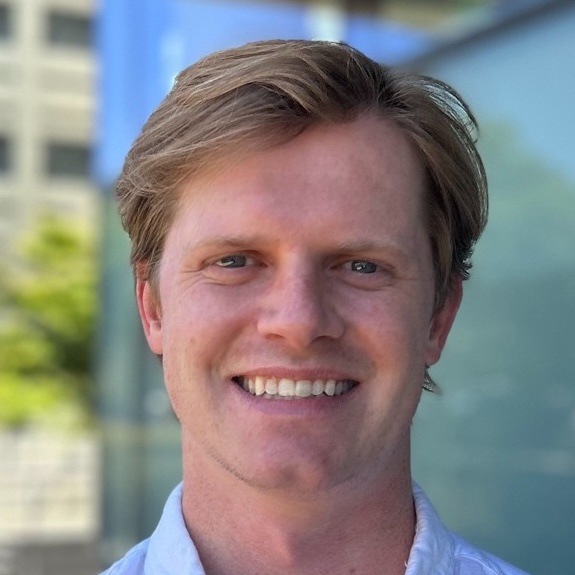
Brooks Benard, Ph.D.
Computational Cancer Biologist · Stanford University
I am a computational biologist in the Department of Pathology at Stanford University. My work focuses on developing and applying statistical learning methods to identify therapeutically relevant targets from gene expression data across bulk, single-cell, and spatial transcriptomic modalities in cancer.
I performed my PhD research with Dr. Ravi Majeti in the Cancer Biology program at Stanford University. Prior to Stanford, I completed my bachelor's degree in Molecular Biosciences and Biotechnology at ASU, where I spent time in the labs of Dr. Shelley Haydel at the Biodesign Institute, and Dr. Jonathan Keats at TGen.
Research
Current
As a Staff Scientist in the Gentles Lab, I have curated a database of bulk gene expression associations with outcomes for adult, pediatric, and immunotherapy cohorts across cancers (PRECOG; paper). PRECOG lets researchers examine whether higher expression of a gene and immune cell abundance are prognostic for shorter or longer patient survival. PRECOG includes 335 cancer datasets with survival or response data for >46,000 patients, covering ~55 malignancies.
I have also developed a computational method to map prognostic signals from resources such as PRECOG onto single cell and spatial data. This approach helps identify cell states and spatial determinants of potential therapeutic targeting. We have applied this method in a pan-cancer approach to single cell data from TISCH2 and scPCA, as well as spatial transcriptomics data from HTAN. See poster.
PhD
My doctoral work focused on modeling how clonal architecture in AML is associated with prognostic risk and drug response. Clonal architecture paper. Meta AML Explorer provides interactive exploration of these data.
Undergrad
— Keats Lab: At TGen, I helped with the MMRF CoMMpass Study by analyzing the largest genomic sequencing of multiple myeloma to-date (Nature Genetics).
— Haydel Lab: In the Haydel Lab at the Biodesign Institute, I performed some of the initial studies identifying druggable interactions in the PrrAB system in Mycobacterium tuberculosis, which helped lay the groundwork for Haydel et al., ACS Infect. Dis..
Resources & Tools
PRECOG
A compendium of gene expression and clinical outcome data for exploring prognostic and predictive biomarkers across cancers and treatment modalities.
Meta AML Explorer
Interactive exploration of AML mutation and clinical outcomes data across ~4,000 patients.
DepMap Shiny
Explore cancer dependency and molecular data via an interactive Shiny application.
Selected Publications
Full list on Google Scholar | ORCiD
Comprehensive molecular profiling of multiple myeloma identifies refined copy number and expression subtypes
Clonal architecture predicts clinical outcomes and drug sensitivity in acute myeloid leukemia
PRECOG update: an augmented resource of clinical outcome associations with gene expression
Presentations & Posters
Consulting
Contact
Hobbies
When I'm not in the lab, I enjoy cycling, hiking, and backpacking around The Bay — Strava.